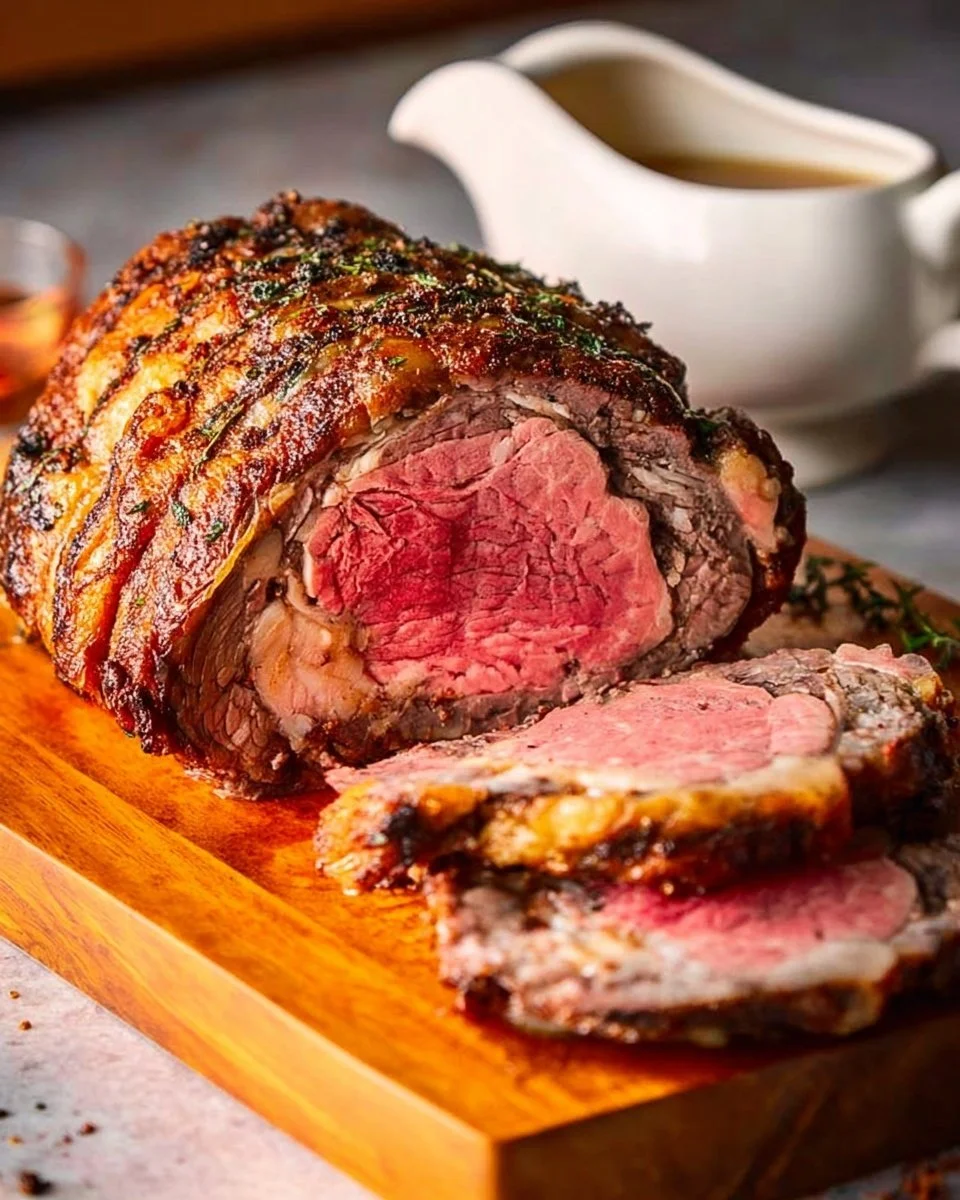
Why Make This Recipe
Christmas Prime Rib is a special dish that brings warmth and joy to holiday gatherings. Its tender, juicy meat creates a wonderful centerpiece for your festive meal, making any celebration feel extraordinary. The combination of seasonings enhances the natural flavors, resulting in a dish that is sure to impress your guests.
Preparing Prime Rib can seem daunting, but this recipe simplifies the process. With just a few steps, you can delight in a restaurant-quality roast at home. The rich flavors and elegant presentation will elevate your Christmas feast.
Equipment Needed for Christmas Prime Rib
To successfully create a delicious Christmas Prime Rib, gather the following equipment:
- Roasting pan
- Meat thermometer
- Baking sheet
- Aluminum foil
- Small mixing bowl
- Whisk
- Gravy boat for serving
What You Need to Make Christmas Prime Rib
- 1 (6 pound) boneless prime rib roast
- 2 tablespoons prepared horseradish
- 2 tablespoons Dijon mustard
- 2 teaspoons kosher salt
- 2 teaspoons coarsely ground black pepper
- 2 teaspoons dried thyme
- 2 teaspoons garlic powder
- 2 stalks celery, cut into 2-inch pieces
- 1 carrot, cut into 2-inch pieces
- 1 small unpeeled onion, quartered and separated
- 2 teaspoons concentrated beef base (paste)
- 1.5 cups water
- 1 teaspoon cornstarch
- 1 teaspoon water
How to Cook Christmas Prime Rib Step by Step
Begin by gathering all your ingredients in one place. This will make the cooking process smooth and efficient. The day before serving, take the prime rib roast out of its packaging. Dry it thoroughly with paper towels to remove any excess moisture. Place the roast on a baking sheet and set it in the refrigerator overnight. This drying process helps create a nice crust when cooking. One hour before you are ready to cook, take the roast out of the fridge to allow it to come to room temperature.
Once the roast is at room temperature, rub it generously with prepared horseradish and Dijon mustard. In a small bowl, mix together kosher salt, coarsely ground black pepper, dried thyme, and garlic powder. Sprinkle this mixture evenly over the roast, making sure to cover all sides for maximum flavor.
Next, preheat your oven to 450 degrees F (230 degrees C). While the oven heats, prepare the vegetables by placing the celery, carrot, and onion into the bottom of a roasting pan. Arrange the seasoned roast on top of the vegetables, allowing them to flavor the meat as it cooks.
Roast the prime rib in the preheated oven for 30 minutes. This step helps develop a beautiful crust on the outside. After 30 minutes, reduce the oven temperature to 350 degrees F (175 degrees C). Continue roasting the beef until it reaches an internal temperature of 130 degrees F (54 degrees C) for medium-rare doneness. This might take around 60 to 90 minutes, depending on the size and shape of your roast.
When the roast is cooked to your liking, carefully remove it from the oven. Transfer it to a serving platter and cover it with a tent of aluminum foil. Let it rest for about 30 minutes. Resting allows the juices to redistribute throughout the meat, ensuring every bite is tender and flavorful. Keep in mind that the internal temperature will increase by about 10 degrees during this resting period.
While the roast is resting, you can make a delicious au jus sauce. Start by skimming off any excess fat from the pan drippings left in the roasting pan. Place the pan over medium heat on the stove. Stir in the concentrated beef base and the 1.5 cups of water. Bring this mixture to a boil, making sure to scrape up and dissolve any flavorful browned bits stuck to the bottom of the pan.
After the sauce reaches a boil, strain the mixture to remove the vegetables. Combine the cornstarch and 1 teaspoon of water in a small bowl, whisking until smooth. Gradually stir this cornstarch mixture into the sauce, allowing it to thicken slightly. Once ready, pour the sauce into a gravy boat for serving alongside the roast.
Finally, slice the rested roast to serve to your guests. Arrange the slices on plates, along with a generous drizzle of your homemade au jus sauce. The moment has come to enjoy your delicious Christmas Prime Rib!
How to Make Christmas Prime Rib
Making Christmas Prime Rib is simpler than you might think. By following the steps above, you will prepare a roast that is both flavorful and beautifully presented. Preparing the roast a day in advance allows the flavors to meld, enhancing the overall taste. Use only fresh ingredients to ensure the best results.
The key to a perfect prime rib lies in the cooking process. Keeping an eye on the temperature is essential, as cooking times can vary based on oven performance, roast size, and initial temperature. Investing in a reliable meat thermometer is useful for achieving that ideal doneness.
How to Serve Christmas Prime Rib
Serving Christmas Prime Rib can be a delightful experience. The table should be set beautifully, complemented by the aromas of the roast. Carve the roast in front of your guests if you want to create an impressive visual experience. This adds an element of drama to the meal.
When serving, arrange the prime rib slices on a large serving platter. Accompanied by warm au jus, the roast can be served alongside sides that complement its rich flavor. Remember to garnish the platter with fresh herbs or vegetables for added color.
What to Serve with Christmas Prime Rib
Pair your Christmas Prime Rib with sides that enhance its richness. Classic options include mashed potatoes, which offer a creamy, buttery complement. Roasted vegetables, such as Brussels sprouts or carrots, add a colorful and nutritious touch to the plate.
Don’t forget about traditional sides like Yorkshire pudding or a rich gravy. A fresh garden salad can also work well to balance the meal’s richness. Lastly, consider a luscious dessert to conclude the festive meal on a sweet note.
How to Store Christmas Prime Rib
To store any leftover Christmas Prime Rib, allow the roast to cool to room temperature after serving. Once cooled, wrap the meat tightly in plastic wrap or aluminum foil. Place the wrapped meat in an airtight container or sealable bag.
You can store the leftover prime rib in the refrigerator for up to four days. If you want to keep it longer, consider freezing it. Wrapped properly, frozen prime rib can last for up to six months. For best flavor, slice only the portion you plan to eat, as whole pieces retain moisture better.
Tips to Make Christmas Prime Rib
For an excellent Christmas Prime Rib, consider these simple tips. First, always use high-quality meat for the best flavor and tenderness. Look for a roast with good marbling, as the fat helps keep the meat juicy during cooking.
Next, don’t rush the resting period! Allowing the roast to rest is essential for juicy slices. Patience pays off with a more flavorful and moist result. Lastly, experiment with different herbs or spices based on your family’s tastes.
Variation
While the classic preparation is wonderful, there are variations to consider. Adding fresh herbs such as rosemary can provide a unique flavor profile. You could also try using a different type of mustard, such as whole grain, for a bit more texture.
For a slightly spicier kick, consider a blend of horseradish and hot sauce. These variations will help put your personal spin on the traditional dish while keeping it festive.
Best Time to Make Christmas Prime Rib
The best time to make Christmas Prime Rib is typically during the holiday season. Many families enjoy gathering around this rich dish for Christmas dinner. However, you can also serve this roast at special occasions such as anniversaries, birthdays, or family reunions.
Regardless of the occasion, prime rib offers a sense of indulgence. Make the dish part of your festive traditions, and it will surely become a family favorite.
Common Mistakes to Avoid
When preparing Christmas Prime Rib, there are a few common mistakes to avoid. One mistake is cutting into the roast too early. Remember that resting is crucial for maintaining moisture, so be patient.
Another error is not seasoning generously. The exterior seasoning is essential for flavor; using too little can lead to a bland roast. Finally, avoid underestimating the cooking times, as they can vary. Always rely on a meat thermometer to check for doneness.
Nutritional Notes (optional)
Prime rib is a significant source of protein. While it offers a delicious flavor, it is also relatively high in fat, especially saturated fat. Enjoying it in moderation can fit well into a balanced diet, especially during festive occasions.
Pairing the roast with plenty of vegetables will help create a nutritious meal. Consider smaller portions of prime rib alongside larger servings of healthier side dishes.
FAQs
1. Can I use bone-in prime rib instead of boneless?
Yes, you can use bone-in prime rib. It often has more flavor, but cooking times may vary slightly.
2. What if I want my prime rib medium or well done?
If you prefer a medium or well-done roast, cook until the internal temperature reaches 140 degrees F (60 degrees C) for medium and 160 degrees F (71 degrees C) for well done.
3. Can I prepare the prime rib ahead of time?
Yes, you can season your roast a day in advance. Just remember to let it reach room temperature before cooking.
Conclusion
Christmas Prime Rib is a true delight that can elevate any holiday dinner. With its tender, juicy meat and delightful flavors, it will surely become a beloved tradition in your household. By following the steps and tips provided, you can create a memorable holiday meal that family and friends will rave about.
This dish not only satisfies hunger but also brings loved ones together to celebrate special moments. Whether it’s Christmas or another occasion, the joy it brings is what truly matters. Enjoy your culinary journey and create lasting memories around the table!
