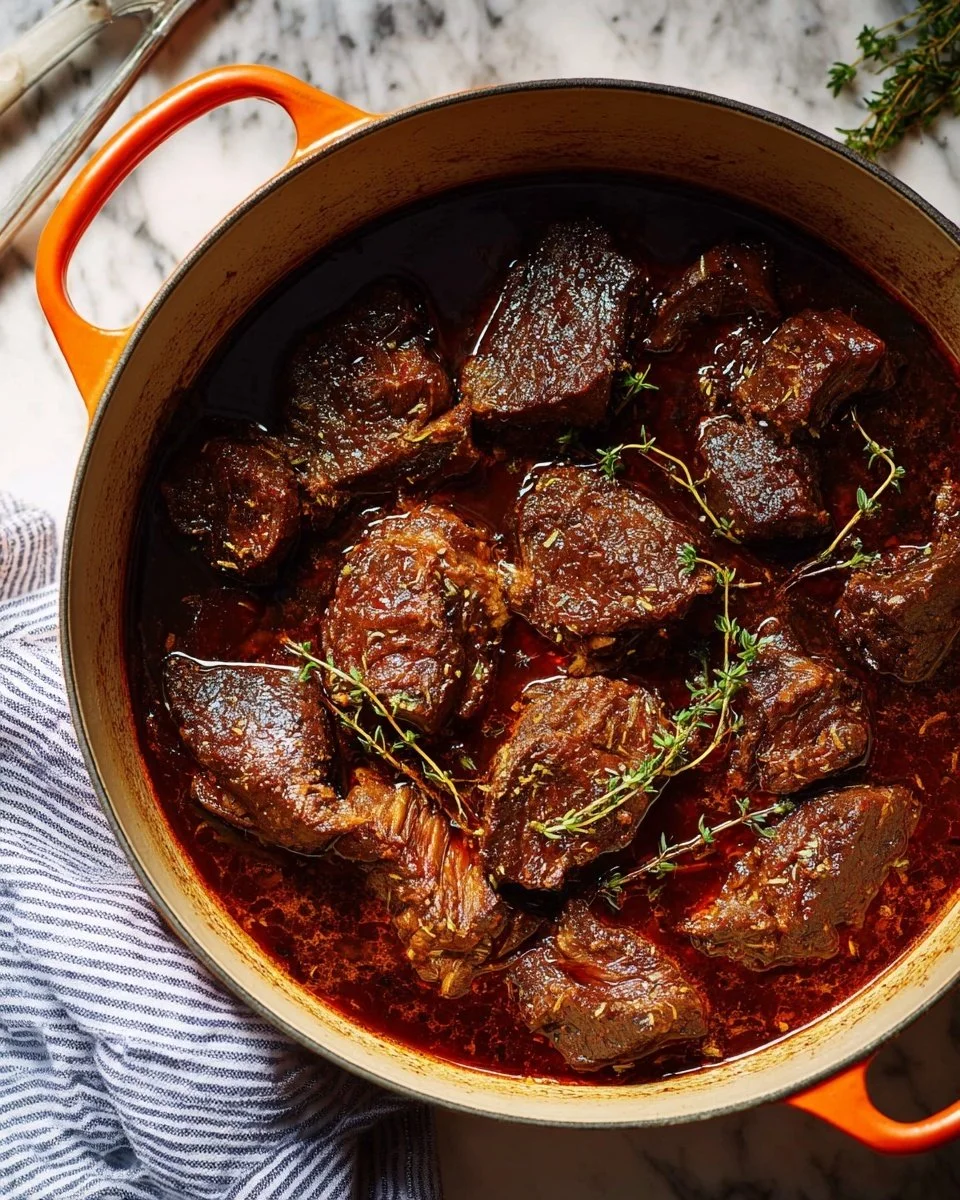
Why Make This Recipe
Pork stew is a classic comfort dish that warms the soul. This hearty meal combines tender pork with a rich, flavorful broth that is perfect for cooling down on a cold day. The infusion of herbs and the depth from the wine create a memorable taste that is sure to please anyone at the table.
Making pork stew is not only satisfying but also an opportunity to bring your family together. It’s a straightforward dish that allows everyone to enjoy a wholesome meal that feels special. Plus, the aroma that fills your kitchen while it cooks will have everyone eagerly anticipating dinner.
Equipment Needed for Pork Stew
To make this delicious pork stew, you will need a few essential tools:
- Large Dutch oven
- Wood spoon or spatula
- Measuring cups and spoons
- Chef’s knife
- Cutting board
- Plate for resting the pork
- Ladle for serving the stew
Having the right equipment ready will make the cooking process much more enjoyable and efficient.
What You Need to Make Pork Stew
Gathering the right ingredients is crucial for a successful pork stew. Here’s what you need:
- 2 pounds pork bone-in country-style ribs, cut in 2-inch cubes
- Kosher salt and freshly ground black pepper
- 3 tablespoons vegetable oil
- 3 medium onions, chopped
- 1 tablespoon tomato paste
- 1 750 ml bottle dry red wine
- 10 sprigs flat-leaf parsley
- 8 sprigs thyme
- 1 teaspoon oregano
- 2 sprigs rosemary
- 4 cloves garlic, grated
- 4 cups low-sodium beef or chicken stock
- 1 teaspoon red chili pepper flakes (optional)
Having all your ingredients prepared and measured will streamline your cooking process and make it much easier to create this delightful dish!
How to Cook Pork Stew Step by Step
Start your cooking adventure by preheating your oven to 350F (190C). This will get it ready for the final cooking phase of your stew.
Next, take your 2 pounds of pork ribs and season them well with kosher salt and freshly ground black pepper. This seasoning will infuse your meat with flavor, making your stew not only delicious but truly memorable.
In a large Dutch oven, heat 3 tablespoons of vegetable oil over medium-high heat. Once the oil is hot, add the seasoned pork ribs in batches, ensuring they brown nicely on all sides. This browning process should take about 8 minutes per batch. Once browned, transfer the ribs to a plate to rest.
Now, carefully pour off all but 3 tablespoons of the drippings from the pot. You want to keep enough fat to help flavor the onions. Add 3 chopped medium onions to the pot and cook until they are browned, which should take around 5 minutes. Stir them occasionally to ensure even cooking.
Once the onions are browned, it’s time to add 1 tablespoon of tomato paste. Cook the paste for about 2 to 3 minutes, stirring until it becomes deep red. This will boost the richness of your stew.
Now, gradually stir in your 750 ml bottle of dry red wine. This will not only deglaze the pot but also introduce a wonderful complexity to the flavor. Return the pork ribs to the pot along with any accumulated juices. Bring the mixture to a boil.
Once boiling, decrease the heat and let it simmer until the wine has reduced by half; this should take about 25 minutes. During this time, the flavors will deepen and meld together beautifully.
After the wine has reduced, add all of the herbs: 10 sprigs of flat-leaf parsley, 8 sprigs of thyme, 1 teaspoon of oregano, and 2 sprigs of rosemary. Don’t forget to include the 4 grated cloves of garlic for an extra punch of flavor. If you like a little heat, toss in 1 teaspoon of red chili pepper flakes.
Next, stir in 4 cups of low-sodium beef or chicken stock. Bring everything back to a simmer, then cover the pot and carefully transfer it to your preheated oven.
Bake for about 2 to 2.5 hours, or until the ribs are fork-tender. The long, slow cooking process allows all the flavors to meld and the pork to become incredibly tender, creating a mouthwatering dish.
Once your time is up, carefully remove the pot from the oven, and strain the sauce to discard any excess fat. This will ensure your stew is rich without being greasy. Serve the stew in bowls, alongside the flavorful sauce so everyone can drizzle it to their preference.
How to Make Pork Stew
Making pork stew involves a series of straightforward steps that, when followed, lead to a flavorful and comforting dish. Start by prepping your ingredients: chop the onions, season the pork, and measure out your herbs and liquids.
Once your ingredients are ready, focus on browning the pork ribs. This step is crucial for developing a deep flavor in your stew. When the pork is browned, set it aside and use the drippings to sauté the onions and tomato paste, enhancing the flavor base for your stew.
Next, deglaze with the red wine to lift all the delicious bits stuck to the bottom of the pot. Don’t rush this step; let the wine reduce to concentrate the flavors further. When you add the herbs and garlic, you will notice a wonderful aroma filling your kitchen, a sign of the delectable dish coming together.
Finally, letting it cook in the oven is where the magic happens. The low, slow cooking process allows the pork to absorb the flavors from the broth and herbs, leading to tender meat that practically melts in your mouth.
How to Serve Pork Stew
Serving pork stew can be as simple or elegant as you wish. Traditionally, you can ladle the stew into bowls and offer the sauce on the side for those who want to top their meat.
For a cozy family dinner, place the bowls directly on the table with slices of crusty bread or rolls. This way, everyone can dive in and savor the combination of hearty stew and fresh bread.
If you want to elevate your serving, consider garnishing the stew with a sprinkle of fresh chopped parsley or a few sprigs of thyme, which adds a pop of color. This simple touch can impress guests at a dinner party or special occasion.
What to Serve with Pork Stew
Pork stew pairs beautifully with a variety of side dishes. A classic choice is to serve it with crusty bread, perfect for soaking up the rich sauce. This combination provides a satisfying and hearty meal.
You might also consider pairing it with creamy mashed potatoes or buttery egg noodles; both options complement the flavors in the stew without overwhelming them. For something lighter, a fresh green salad can provide a nice contrast to the richness of the stew.
If you’re feeling adventurous, roasted vegetables can also make an excellent side. The slight caramelization from roasting brings out natural sweetness and adds another layer of flavor to your meal.
How to Store Pork Stew
Storing leftover pork stew is quite simple. Allow the stew to cool down before transferring it to an airtight container. This way, you can keep the flavors intact and prevent any spoiling.
The stew can be stored in the refrigerator for up to 3 to 4 days. When you are ready to enjoy your leftovers, simply reheat in a saucepan over medium heat. Add a splash of stock or water if it seems too thick.
For long-term storage, consider freezing the stew. Transfer it to a freezer-friendly container or bag, and it can last for up to 3 months. When you want to enjoy it again, thaw it in the fridge overnight before reheating.
Tips to Make Pork Stew
To enhance your pork stew, start with high-quality ingredients. Fresh herbs will provide more flavor than dried ones. If possible, choose a full-bodied red wine for cooking, as it will add depth to your stew.
Browning the pork is a crucial step; don’t rush this process. Take your time to achieve a nice caramelization, which enhances the stew’s overall taste.
Consider adding other vegetables like carrots or potatoes for added nutrition and flavor. Not only will they absorb the broth’s flavor, but they will also make your stew even heartier.
Lastly, feel free to adjust the seasoning as you cook. Everyone has different preferences, and a quick taste test can help you decide if it needs a little more salt, pepper, or herbs.
Variation
While this pork stew recipe is delightful as is, there are many variations you can explore. For a spicy twist, add more chili pepper flakes or diced jalapenos to give your stew an extra kick.
If you prefer to use different cuts of pork, try using pork shoulder or loin for a leaner option. You could also experiment with different types of wine, such as a Pinot Noir or Merlot, to see how it alters the flavor profile of the dish.
Another variation is to incorporate various vegetables. Adding diced carrots, potatoes, or even mushrooms can provide additional texture and flavor, making your stew a little more unique.
Best Time to Make Pork Stew
Pork stew is an excellent choice for those chilly fall and winter days when you crave comfort food. The long cooking time allows the flavors to develop deeply, making it perfect for a lazy Sunday afternoon.
However, it’s also a great dish to prepare for gatherings or family dinners. It’s a one-pot meal that can feed a crowd, making it perfect for celebrations or holidays.
You can also enjoy it any time you’re in the mood for something hearty, warming, and satisfying. Just remember that the longer the stew simmers, the better the flavors meld together.
Common Mistakes to Avoid
One common mistake when making pork stew is not browning the meat properly. Make sure to take your time with this step for maximum flavor.
Another pitfall is adding too much liquid at once. Follow the recipe’s guidance, and only add more stock if necessary. This ensures that the stew maintains a thick, rich consistency.
Lastly, remember to let your stew rest after cooking. The flavors will have time to marry, and it often tastes even better the next day!
Nutritional Notes (Optional)
Pork stew can be a hearty and nutritious meal, offering a good source of protein and essential vitamins and minerals. The addition of herbs enhances its antioxidant properties, which can support overall health.
However, keep in mind that the nutritional value can vary based on the ingredients you use. Choosing lean cuts of pork and low-sodium stock can help keep it a healthier option.
Additionally, adding more vegetables will increase the fiber content, making it a more balanced meal. Enjoy this dish in moderation, especially if you’re mindful of calorie intake.
FAQs
Can I use boneless pork instead of bone-in?
Yes! Boneless pork can be used in place of bone-in, but keep in mind that bones add flavor to the broth.
Can I make this stew in a slow cooker?
Absolutely! To prepare it in a slow cooker, brown the meat and onions first, then transfer everything to the slow cooker, set it on low for about 6-8 hours, and enjoy!
Is it necessary to use red wine?
While red wine enhances the flavor, you can substitute it with additional stock or broth. It might slightly change the taste, but it will still be delicious.
Conclusion
Pork stew is an excellent choice for those seeking comfort and warmth in a single dish. Its hearty nature, combined with the tasty blend of herbs and spices, makes it a timeless recipe. By following the steps outlined above, you’ll create a satisfying meal that can be enjoyed on any occasion.
Dive into the heartwarming experience of cooking and serving this pork stew, and let it become a cherished dish in your kitchen. With the potential for variations, it can easily become a staple that you find yourself returning to again and again. So gather your ingredients, get cooking, and revel in the deliciousness of pork stew!
